English Blog
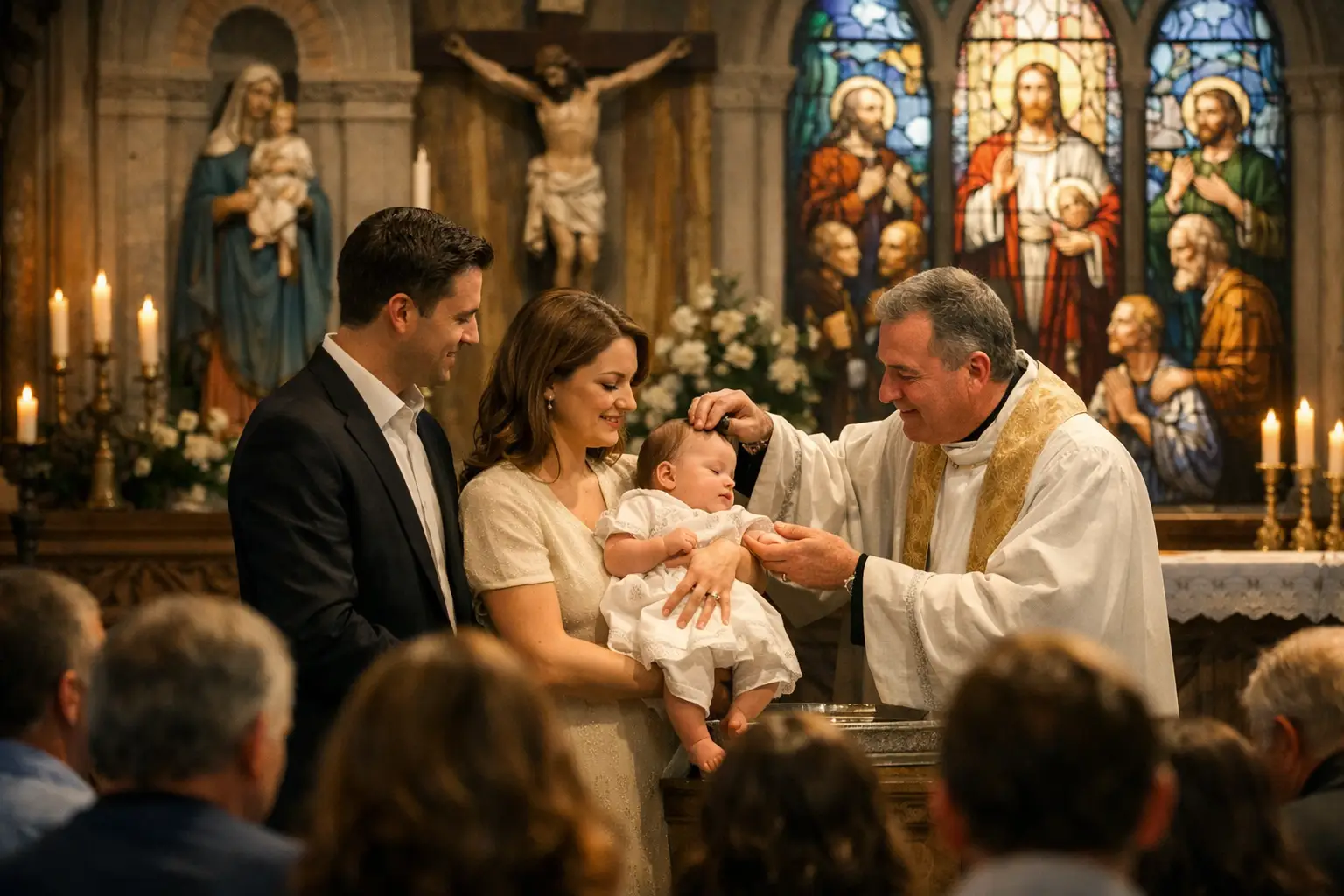
baptism commission of Jesus?
07-01-2026 - Posted by Geert-JanOriginally posted on August 05, 2008 – by Andre Piet
last edited on 11 November 2023
One of the best-known texts of the Bible is the so-called missionary commission (or “great commission”), as we find it in Matthew 28:19
Going, then, disciple all the nations, baptizing them into the name of the Father and of the Son and of the holy spirit, and teaching them to be keeping all, whatsoever I direct you.
the apostles never baptized according to Matthew 28:19
What has always been puzzling is that if we take these words as a formulation for water baptism, we never encounter this formula in the book of Acts. Wherever baptism takes place, it is always into (or upon or unto) the name of Jesus Christ (Acts 2:38; 8:16; 10:48; 19:5). Never into the name of the Father, the Son, and the holy spirit.
were the nations baptized?
What is also puzzling is that, besides Israel, the nations would also have to be baptized. Where else do we find this? Indeed in Mark 16:16, but this text is not decisive because it forms part of a passage (16:9–20) that stands between square brackets [ ] in our Bibles, that is, it is absent from the oldest complete manuscripts of the New Testament; it is a later addition.
Rituals, including water baptism, are for Israel and “the alien within her gates” (cf. Heb. 6:1; John 1:31). Rituals are not an obligation for the nations. Not a single one. Not without reason Paul declares that he was not sent to baptize (1 Cor. 1:17). Logical, for he was the “apostle of the nations” and also sent to the nations. Not to baptize, but to announce the Evangel, gratuitously.
an unbiblical formula
And then the formula itself. Do not the words sound particularly strange coming from Jesus’ mouth? Where elsewhere in the Bible is there any mention of “the name of the Father, the Son and the holy spirit”? And where else does the Spirit have a distinct name from the Father and the Son? Is anything anywhere ever commanded in the name of the holy spirit? The answer to each of these questions is: no, nowhere do we find this. Does the formula in Matthew 28:19 not have the scent of the Council of Nicaea (325 AD) about it? Could it be that the text was edited to justify an ecclesiastical practice? And would this adapted text then have found its way in that manner into the three great manuscripts of the New Testament (the Alexandrinus, Sinaiticus and Vaticanus)? In any case, the manuscripts date from the time of this council…
original reading
The problem with regard to Matthew 28:19 is that no older complete manuscripts are available to us than those mentioned above. What we do have, however, are a number of older quotations of Matthew 28:19, that is, older texts in which Matthew 28:19 is cited. They originate from Eusebius of Caesarea (260–339), to whom one of the oldest manuscripts of the Gospel of Matthew must have been available. According to these quotations, this originally stood in Matthew 28:19:
Going, then, disciple all the nations in my name and teach them to be keeping all, whatsoever I direct you.
Note: in this much older reading of Matthew 28:19 there is neither mention of baptism nor a formulation that suggests the Trinity. Even major names who stand squarely behind the confession of Nicaea (see below) proceed from the assumption that the traditional reading of Matthew 28:19 was not Jesus’ own words. The words “and baptize them into the name of the Father, the Son and the holy spirit” have the appearance of a later Church addition. Added in order to justify the deviation from the original Biblical truth…
The Catholic Encyclopedia:
The baptismal formula was changed from the name of Jesus Christ into the words Father, Son and Holy Spirit by the Catholic Church in the second century.The Jerusalem Bible, an English Roman Catholic Bible translation:
It may be that this formulation, as a total expression, is a reflection of later liturgical usage in the early Catholic community. One should bear in mind that Acts speaks of baptizing “into the name of Jesus”…”.The International Standard Bible Encyclopedia, under “Baptism”:
Matthew 28:19 in particular canonizes a later ecclesiastical situation (…) the Trinitarian formula is foreign to the mouth of Jesus.Ethelbert W. Bullinger (the man behind the Companion Bible) in Word Studies on the HOLY SPIRIT:
… there is one great problem in connection with the words: … that the apostles themselves never obeyed this command; and in the rest of the New Testament there is no indication that it was ever obeyed by anyone (…) It is difficult to suppose that so clear a command was universally neglected (…) As regards the Greek manuscripts, none of them goes back beyond the fourth century, and it seems clear that the Syrian section of the church knew nothing of these words.