
 UltimateGoodNews
why did God institute bloody sacrifices?
18-01-2026 - Posted by Geert-JanOriginally posted on January 17, 2026 – by Andre Piet
Why do we read about so many bloody sacrifices in the Old Testament? Was that because God could not forgive without blood? Did something first have to be paid before there was room for grace? That idea is widespread, but it does not fit with what Scripture itself shows.
God is not only willing to forgive after blood has first been shed. He is always the One who takes the initiative (Exod. 34:6–7; Ps. 103:8–12; Isa. 43:25). Forgiveness that is made dependent on payment ceases to be forgiveness and becomes settlement.
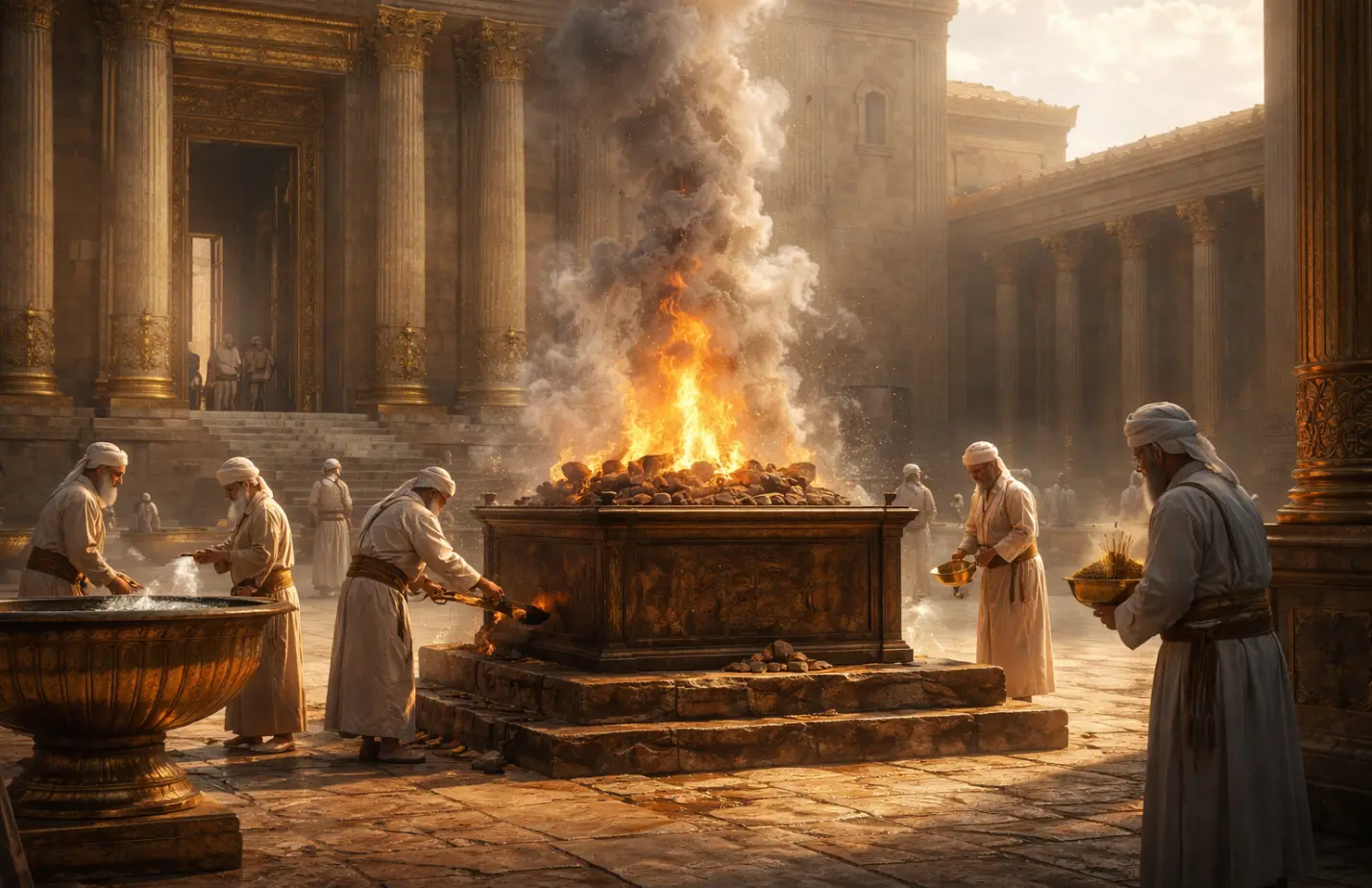
The sacrifices are prophetic images. They point forward to the great sacrifice that God Himself would bring (Heb. 10:1). In this regard it is important to clearly distinguish what a sacrifice is in Scripture. The slaughtering of an animal is not the sacrifice. That is what precedes it. It is death that precedes the sacrifice, not the sacrifice itself. The sacrifice takes place when that which has died is placed on the altar and ascends to God. An altar, after all, is an elevation. The sacrifice is not the death, but what ascends to God after the death as a fragrant aroma.
Thus it becomes visible what humanity does: it takes innocent life. A flawless animal, without defect, was slaughtered. That in itself is sin. Ultimately, this is what also happened to Jesus. He was killed by humans (Acts 2:23; Acts 3:15), not because God needed blood, but because the world rejected Him.
But that is not the actual sacrifice. The true sacrifice is what God did afterward: He roused Him from among the dead (Acts 2:24; Rom. 6:4). Only then did He ascend to God as a fragrant aroma. Not death, but the life that comes forth out of death, is the real sacrifice (Eph. 5:2; Heb. 9:14). Not the dying, but the resurrection.
All Old Testament sacrifices point to this. They show how deep evil goes, but also how far God goes to reverse it (Gen. 50:20; Rom. 5:8). He does not leave it at death and loss, but brings forth life. He even turns the greatest crime—the killing of His Son—into salvation (Acts 4:10–12).
Therefore, the sacrifices are not payment, but instruction. Not conditions, but foreshadowings (Col. 2:17). They teach us that reconciliation does not begin with what humanity does, but with what God does. It is not God who is reconciled, but the world (2 Cor. 5:19). He is not a God who must first be appeased, but a God who Himself restores, forgives, and creates new life (Rom. 4:17).
Delen:
Categories
Recent blog items
- Where Expectation Disappears
- Colossians 3:5 – Deaden, Then
- Colossians 3:4 – Appearing With Him In Glory
- Newsflash: Is a crisis looming over the Temple Mount?
- “Entirely Different in Freedom” [In vrijheid geheel anders] — Anastasia Zoë
- the rhythm of seven
- Newsflash: Netanyahu Wants U.S. Support Down to Zero
- a great affliction such as has not occurred